
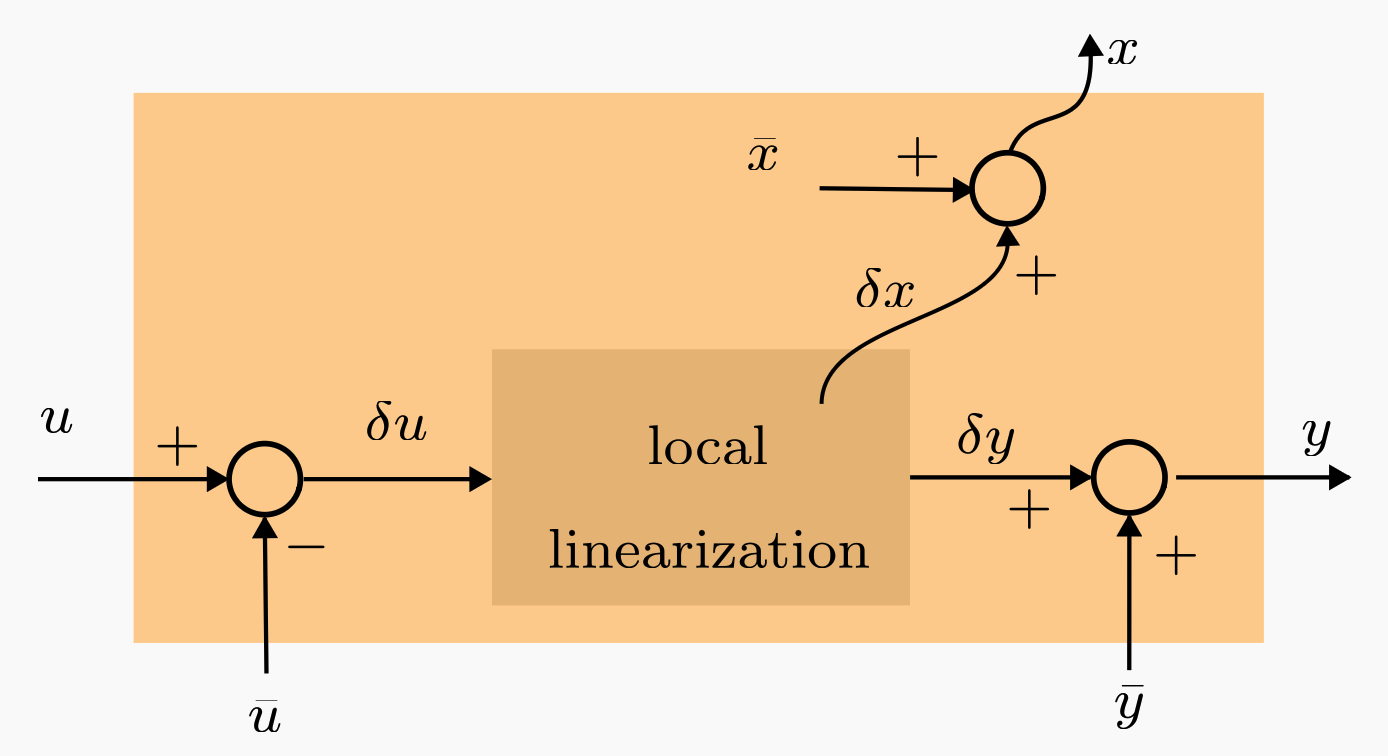
This course introduces the foundations of modern control theory for multivariable dynamic systems, providing the tools needed to analyze, design, and reason about complex systems in both continuous and discrete time. Starting from state-space modeling and Linear Time-Invariant (LTI) systems, the course develops a rigorous framework for understanding stability, structural properties, feedback, robustness, and optimization-based control.
The theory is tightly connected to real-world applications, including robotics, autonomous systems, aerospace, power and energy systems, process control, and cyber-physical systems. Through lectures and hands-on laboratory sessions using Matlab/Simulink, students learn how abstract concepts such as controllability, observability, state feedback, observers, and robustness translate into practical control architectures for real engineering systems.
By the end of the course, students will be equipped to analyze dynamic behavior, design feedback controllers, and make informed design choices under uncertainty, with a solid theoretical background aligned with current engineering practice and societal challenges, including those addressed by the UN 2030 Sustainable Development Goals.
The theory is tightly connected to real-world applications, including robotics, autonomous systems, aerospace, power and energy systems, process control, and cyber-physical systems. Through lectures and hands-on laboratory sessions using Matlab/Simulink, students learn how abstract concepts such as controllability, observability, state feedback, observers, and robustness translate into practical control architectures for real engineering systems.
By the end of the course, students will be equipped to analyze dynamic behavior, design feedback controllers, and make informed design choices under uncertainty, with a solid theoretical background aligned with current engineering practice and societal challenges, including those addressed by the UN 2030 Sustainable Development Goals.
- Teacher: FELICE ANDREA PELLEGRINO
The objective of the integrated course is to provide the students with the advanced methodological tools for the analysis of dynamic systems in the discrete-time domain, both in a deterministic (the 3 ECS module “DIGITAL SYSTEMS”, code 454MI-2) and in a stochastic setting (the present 6 ECS module “DATA-DRIVEN DIGITAL SYSTEMS”, code 454MI-1). Specifically, the present module addresses the analysis and design of estimation, prediction, and identification algorithms using experimental data, as well as the design and implementation of state estimation algorithms in deterministic and stochastic frameworks. As a whole, the integrated course 454MI, made of 454MI-1 and 454MI-2, is designed as a complement to the course of Fundamentals of Automatic Control offered in the second year of the degree courses, since it is focused on the discrete-time context, which is more suitable to address topics in ICT and data management. The course extends the knowledge base to include estimation and identification techniques from experimental data and addresses practical implementation aspects. The course is suitable for 4th year students, both in the industrial context and in the ICT and data management framework. The present 6 ECS module is the second within the logical flow of the entire integrated course with code 454MI—the topics concern stochastic discrete-time systems, with emphasis on estimation and identification methodologies based on experimental data.
- Teacher: GIANFRANCO FENU
- Teacher: THOMAS PARISINI
- Teacher: GIANFRANCO FENU
- Teacher: THOMAS PARISINI

- Teacher: SERGIO CARRATO
- Teacher: STEFANO MARSI